We may earn a commission if you buy through our links, at no extra cost to you. Products are selected for usefulness, not commission rate.
A clock that looks right on a product page can be hard to read across the room, too bright beside the bed, or awkward to mount where you need it. Start with where you will stand or sit when you check the time. Then decide whether the clock has a second job, such as waking you up, showing the temperature, or filling a blank wall.
This clock buying guide compares six options from Sundoa’s Clocks collection, from compact alarm clocks to decorative wall models.
Compare clock styles by where you’ll use them
| Clock | Where it fits | Check before buying |
|---|---|---|
| 14-inch LED digital wall clock | A kitchen, office, or shared room where you want the time, date, and room temperature in one glance | Check outlet location, cable routing, and visibility from the far side of the room. |
| Wood-pattern LED alarm clock | A nightstand or desk where you can reach the snooze control | Compare the listing’s continuous USB display with the sound-activated display mode. |
| Double-sided LED corner wall clock | A corner approached from two directions, such as a hallway junction | Check clearance on both walls and how the sensor lighting behaves after dark. |
| 40 cm frameless acrylic wall clock | A smooth wall with limited space between shelves or artwork | Measure the full 40 cm footprint and confirm the adhesive is suitable for the finish. |
| 53 cm golden peacock wall clock | A prominent wall where the clock also serves as a decorative piece | Allow room for the entire 53 × 53 cm silhouette and check what battery is required. |
| 70 cm mirror-acrylic sticker clock | A broad, smooth wall where individual markers can spread around the hands | Mock up the full layout and check for glare and hand clearance. |
Choose for the viewing distance
For a clock across the kitchen or office, look at the size and contrast of the digits or hands. A quoted clock width often includes the case or decoration. The 14-inch digital wall model groups the time, calendar information, and temperature together. If you mainly need the time from across the room, check the listing photos for digit size and where the smaller information appears. A plug-in clock also needs an outlet close enough to reach with a tidy cable route.
For a corner, stand on each approach and mark where you naturally look. A double-sided face helps when two sightlines converge, but a tall cabinet or open door can still block one face. The corner model lists light- and sound-triggered illumination. If you need a display you can read continuously at night, check how long its illumination stays active.
Pick a bedside clock you can live with at night
Think through the first and last minutes of your day. Can you reach snooze while lying down? Can you read the display without sitting up? Will the light bother you when the room is dark? The wood-pattern model lists three independent alarms and a sound-activated display option. Its listing also describes a continuous display on USB power. Confirm the power setup for your preferred behavior before planning where the clock will sit. Sound activation refers to waking the display, so check the alarm controls separately.
Plan the layout for a decorative wall clock
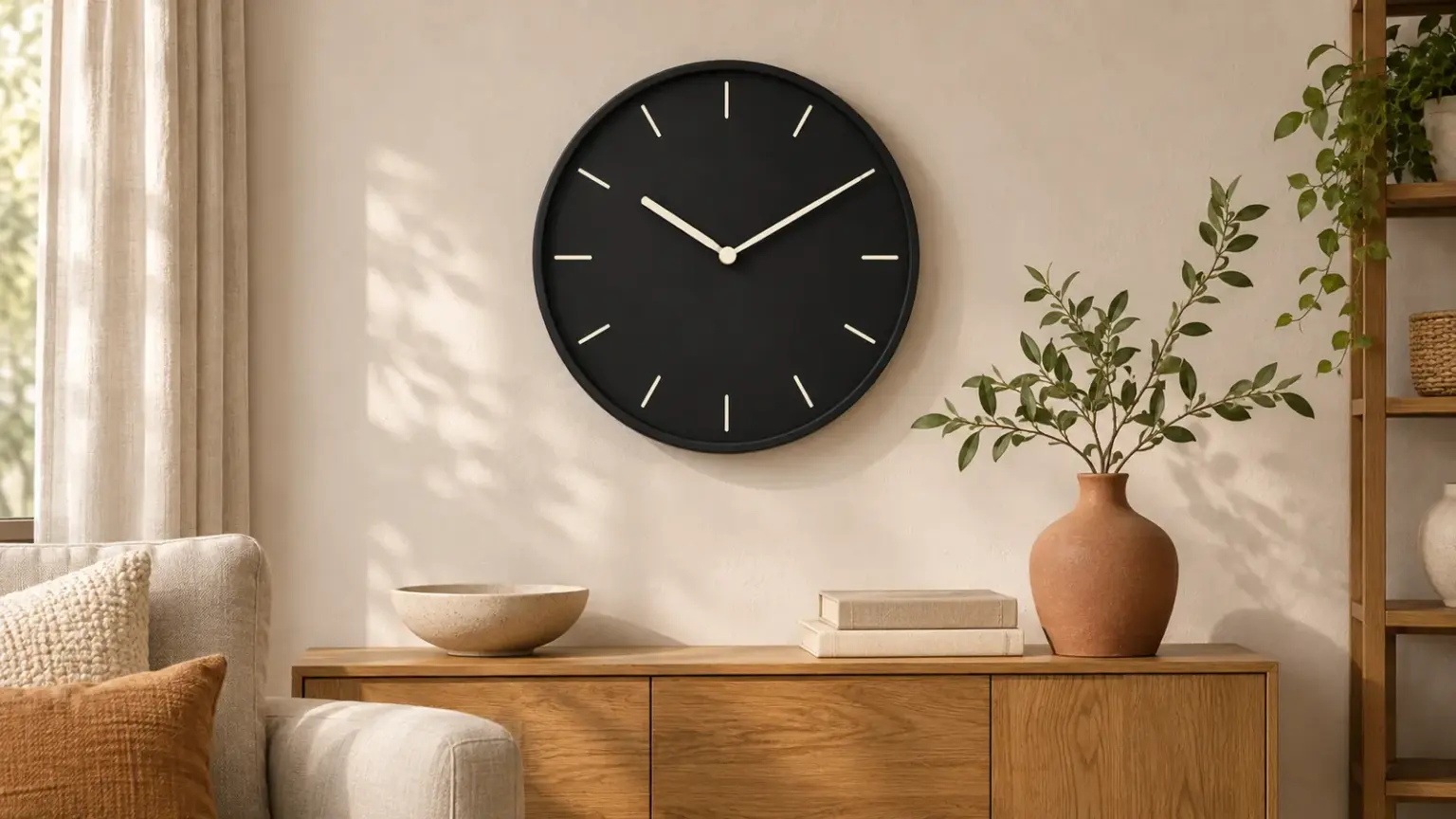
Tape paper to the wall in the clock’s approximate shape and look at it from your normal seat and the doorway. The 40 cm frameless design fits a tighter area than the 70 cm mirror-acrylic layout. Both spread components across the wall, so start from the center and check the spacing in every direction before pressing anything down. Smooth surfaces are listed for the 40 cm model. Confirm adhesion and removability if the wall is textured, freshly painted, or rented.
The 53 cm peacock design needs clear space around its full silhouette. Factor in nearby lamps, picture frames, and shelf edges. To judge readability, look at the contrast between the hands and the dial separately from the surrounding ornament. With mirror finishes, check the spot during the brightest part of the day. A reflection from a window across the room can make a face harder to read.
Shopping checklist
- Measure the usable wall or shelf space and leave clearance around the case, hands, or separate markers.
- Check the clock from your usual viewing position and consider contrast in daylight and after dark.
- Confirm power type, battery inclusion, outlet location, and whether backup power preserves settings or also runs the display.
- Review mounting instructions for the wall material and confirm what fixings are included.
- Confirm the selected finish, dimensions, and display or alarm behavior on the listing before checkout.
Frequently asked questions
Is a digital or analog clock easier to read across a room?
Large, high-contrast digits are useful when you want the exact time at a glance. An analog face can also read clearly when the hands stand out against a simple dial. Compare the time display itself from your usual distance.
How much wall space does a frameless clock need?
Allow for the full marker layout, the sweep of the hands, and a margin around the clock. For the 70 × 70 cm listing, mark out that area first and check the installation guide before fixing the markers.
Can I put a plug-in digital clock anywhere on a wall?
Choose a spot within reach of a suitable outlet and account for the cable before installing the clock. Also check whether the listing specifies what happens to the time and alarms after a power cut.
Will a decorative analog clock tick?
Check the product’s movement description if sound matters, especially for a bedroom or quiet office. The peacock listing describes its movement as quiet. If ticking would affect your choice, confirm the specification for the version you order.