We may earn a commission if you buy through our links, at no extra cost to you. Products are selected for usefulness, not commission rate.
The best travel backpack is the smallest bag that carries your real load comfortably, protects it from the conditions you expect, and lets you reach important items without unpacking everything. Capacity matters, but fit, access, strap design, empty weight, weather protection, and organization decide whether the bag feels useful after several hours. A large pack that pulls away from the body can be less practical than a compact daypack packed with discipline.
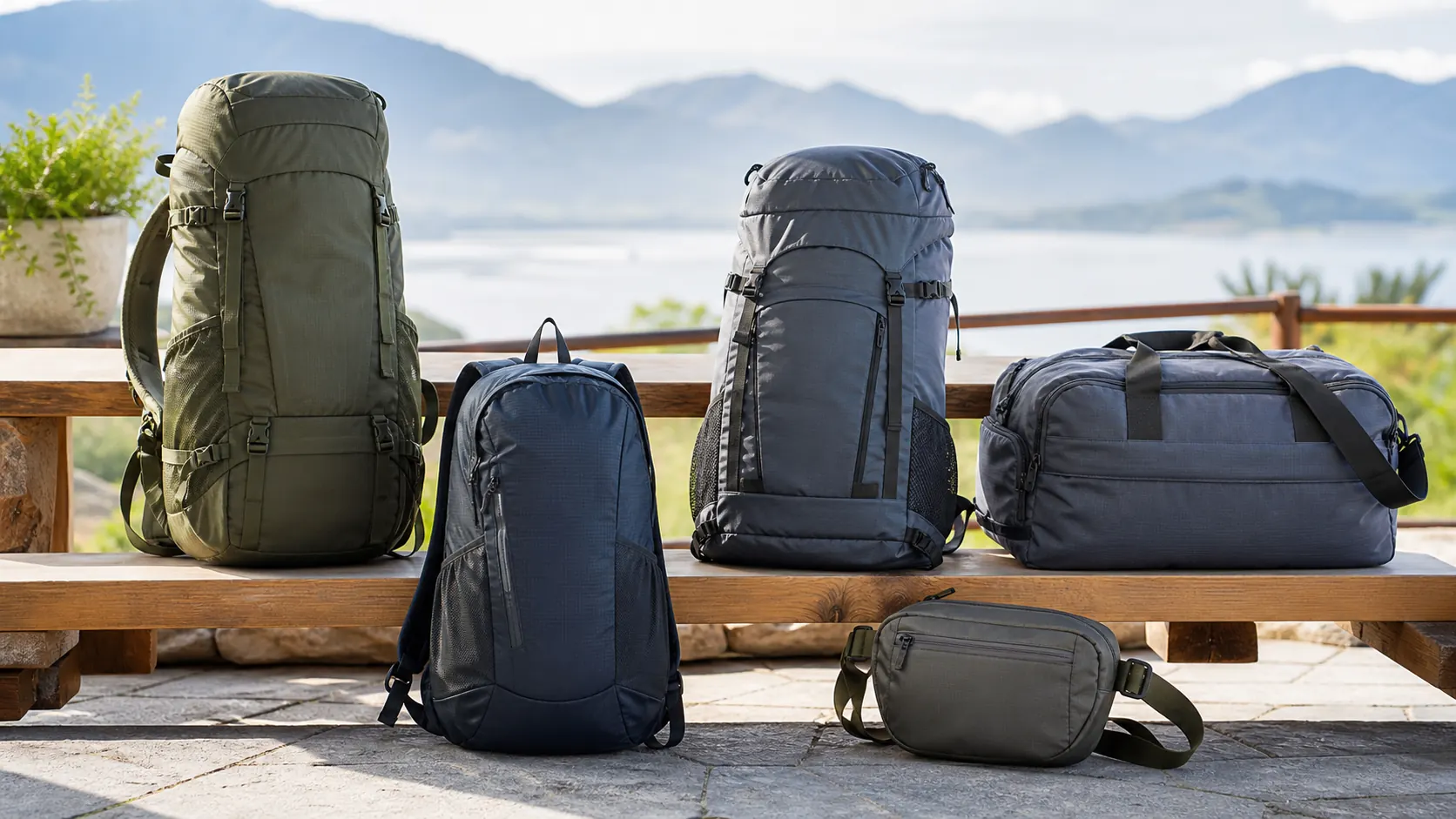
This travel backpacks guide explains how to choose among foldable daypacks, 25-liter hiking packs, 40-liter travel backpacks, waist and crossbody bags, gym duffels, and task-specific pouches. It uses products in Sundoa’s Bags and Accessories collection as examples, while keeping the advice focused on fit and use rather than unverified seller claims.
Travel backpacks: the quick answer
Begin with trip length and the heaviest realistic packing list. For a light day out, a foldable or 15-25 liter pack may be enough. For day hiking or travel with layers, food, and water, a structured pack around 25 liters can provide better support. A 40-liter pack may suit longer trips or carry-on-oriented packing, subject to the exact airline limits. Use a waist or crossbody bag for documents and frequently accessed essentials, not as a substitute for a properly fitted main bag.
- Measure torso and strap fit, not only bag height.
- Pack heavy items close to the back and around the middle of the load.
- Choose access style based on how often you open the bag.
- Treat “waterproof” carefully; construction, seams, and zippers matter.
- Check airline dimensions directly before every flight.
- Test the packed bag at home for at least thirty minutes.
Choose capacity from a packing list
Liter ratings help compare volume, but they do not reveal shape, usable compartments, or how the bag carries weight. Two packs with the same nominal capacity can behave differently because one is tall and narrow while another is broad and shallow. External pockets, curved back panels, internal dividers, and thick padding also use space.
Write the packing list before choosing the bag. Separate items into essentials, comfort items, and optional items. Then place the actual items on a table. This exposes bulky objects, fragile equipment, and things that need quick access. If the list only fits after aggressive compression, the bag may be too small for repeated use. If the chosen pack has large empty areas, a smaller bag may carry more steadily.
Do not size a bag around the rarest trip unless it will serve only that trip. A modular approach often works better: a comfortable everyday backpack plus a compact crossbody bag, or a main travel bag with a foldable daypack inside. The lightweight foldable backpack listing represents the packable-daypack category. Verify its current dimensions, fabric, and load guidance before using it for heavy gear.
Understanding common bag sizes
Compact daypacks
Small daypacks suit water, a light layer, snacks, a compact camera, and personal items. Their advantages are low empty weight and easy movement in crowds. Their limitation is support: very light designs may lack a shaped back panel, substantial shoulder straps, or a hip belt. Keep dense loads modest and avoid sharp objects pressing against the back.
About 25 liters
A pack in this range can work for day hikes, commuting with extra clothing, and minimalist sightseeing. The 25-liter climbing and travel backpack is a product example. Buyers should inspect the current listing for actual dimensions, back ventilation, strap adjustment, pocket layout, and weather claims.
About 40 liters
A 40-liter travel backpack can hold several days of carefully selected clothing and equipment, but it becomes heavy quickly. The 40-liter hiking and travel backpack and the 40-liter climbing backpack show two options in this class. Capacity labels do not guarantee airline acceptance or proper fit. Compare external measurements and support features.
Waist and crossbody bags
A waist or crossbody bag keeps a phone, wallet, documents, transit card, and small battery accessible. The travel crossbody waist bag and a four-pocket canvas waist bag provide examples. Wear the bag where you can see and control it in crowded places, but avoid overloading one side of the body.
Gym and travel duffels
A duffel provides a wide opening and easy packing for clothing or sports gear. The gym and travel sport bag with dry-wet separation is designed around that use. A duffel is less comfortable for long walking when carried from one shoulder, so compare handle length, shoulder strap, structure, and the distance you expect to carry it.
Fit is more important than brand or capacity
A backpack should sit close to the body without forcing the shoulders backward or allowing the load to swing. Shoulder straps should wrap comfortably without rubbing the neck. A sternum strap can stabilize the shoulder straps, while a functional hip belt on a larger pack can transfer part of the load toward the pelvis. A decorative narrow waist strap does not perform like a shaped load-bearing belt.
Torso length matters more than the user’s overall height. If the pack is too long, a hip belt may sit below the useful position. If it is too short, shoulder straps and load lifters may pull incorrectly. Product listings do not always provide full fit ranges, so compare dimensions with a bag that already fits and check return options before ordering.
Test with the expected load, not an empty pack. Add water bottles or soft household items to reach the planned weight. Adjust from the hips upward: place the hip belt if present, tighten shoulder straps until the pack is close but not restrictive, set load lifters gently, and position the sternum strap where it does not interfere with breathing. Walk, climb stairs, sit, and put on a jacket.
Shoulder straps, back panels, and ventilation
Wide straps distribute pressure, but thickness alone does not guarantee comfort. Foam density, edge finishing, curve, and spacing matter. Straps that are too wide can rub smaller users; straps set too close can press the neck. Breathable mesh may improve airflow but can also feel abrasive against delicate fabric.
A padded back panel protects against hard items and creates shape. A ventilated channel may reduce contact, though no backpack eliminates sweat in warm weather. Highly structured frames support heavier loads but add weight and can complicate airline sizing. Lightweight foldable packs offer little structure, so the packing method becomes the back panel.
Inspect stitching where straps join the bag. These areas carry repeated load. Loose threads are not always structural, but widening holes, pulled seams, or distorted webbing are warning signs. Do not exceed the seller’s stated load guidance.
Fabric, coatings, and weather protection
Terms such as water-resistant and waterproof are often used loosely. Fabric may resist light rain while seams and zippers admit water. A coated fabric can lose performance through abrasion, folding, dirt, and age. Even a weather-oriented pack should use internal dry bags or sealed pouches for passports, electronics, medicine, and spare clothing when wet conditions matter.
Nylon and polyester fabrics vary widely by weave, denier, coating, and construction. A larger denier number generally indicates heavier yarn, not automatically better overall durability. High-wear areas include the bottom, zipper corners, strap anchors, and surfaces that rub against the body.
For tools and sharp equipment, a task-specific bag may be safer than a lightweight travel pack. The multi-pocket tool bag is described with Oxford cloth and organizer pockets. Keep tool storage separate from clothing and protect sharp edges. An outdoor first-aid MOLLE pouch can organize an assigned kit, but it should be clearly labeled and stocked according to qualified guidance rather than treated as medical equipment by itself.
Access styles: top loading, panel opening, and pockets
Top-loading packs are simple and can compress well, but items at the bottom require unloading. Panel-opening travel packs open more like luggage, making clothing and organizers easier to see. Clamshell openings need clear floor or bed space. Choose based on where the bag will be opened: a hostel room, airport seat, trail, train, or office.
External pockets help with water, maps, snacks, and a light layer. Too many small pockets create memory work and invite duplicate items. Assign a purpose to each pocket and keep high-value items away from exposed outer compartments. Stretch mesh is convenient but vulnerable to snagging and abrasion.
Laptop compartments need padding below the device as well as on the sides. A false bottom can prevent impact when the bag is set down. Verify device dimensions rather than relying only on a diagonal screen label. Remove a laptop before placing the pack where it may be bent or compressed.
Zippers, buckles, and compression straps
Zippers should move smoothly without forcing the fabric around corners. Overfilling places side pressure on the teeth and slider. Compression straps can reduce movement and stabilize a partly filled bag, but overtightening may distort fragile contents. Close zippers toward a less exposed position and use locking features only where permitted and useful.
Buckles should operate with the intended gloves or hand strength. Thin side-release buckles save weight but can break under impact. Carry a small repair strap or cord for remote trips, but do not rely on improvised repairs for critical load-bearing components.
Loose strap ends can catch on transport equipment. Roll or secure excess webbing while preserving enough adjustment range. Before checking any bag with a carrier, stow hip belts and shoulder straps if the design allows, or use a protective cover.
Pack for balance and access
Place dense items close to the back and around the middle of the pack. Very heavy items high up can make the load unstable, while dense items far from the back create leverage that pulls on the shoulders. Fill irregular spaces with soft clothing and prevent hard corners from pressing into the back panel.
Keep frequently used items accessible: water, weather layer, medication, travel documents, and a small light. Separate liquids from electronics. Use pouches by task rather than by object type when that matches the trip, such as an arrival pouch with transit card, charging cable, and accommodation details.
Leave a small amount of free space. A bag packed to absolute capacity is difficult to close, organize, and repack. It also leaves no room for food, a damp layer, or an item acquired during travel. Compression cubes can organize clothing but do not reduce weight.
Airline and transport considerations
Airline baggage rules vary by carrier, route, fare, and date. Check the current official dimensions and weight limit for every segment. Do not rely on a product being described as carry-on sized. Soft bags can bulge beyond their listed measurements when overpacked, and external pockets or wheels count toward size.
Measure the packed bag at its widest points and weigh it with everything attached. Keep medicine, documents, valuables, and essential electronics in the item that remains with you, subject to security rules. Batteries and restricted items require current official guidance.
On trains and buses, a smaller bag is easier to keep within sight and away from aisles. A crossbody bag can hold tickets and a phone while the main backpack remains closed. Before standing up, perform a short seat check: pocket, floor, charging socket, overhead area.
Day hiking and outdoor use
For a hike, the bag is only one part of planning. Route, weather, water, navigation, clothing, communication, and local guidance determine what must be carried. Choose capacity after those needs are known. A compact pack that encourages leaving safety items behind is too small.
Use side pockets that retain bottles securely, and confirm you can reach water without straining if that matters. Attachments should not swing or catch vegetation. Keep the center of gravity stable and use internal protection for electronics. A rain cover can help but may blow loose, obstruct access, or leave the harness exposed.
After outdoor use, empty the pack fully, remove debris, air-dry damp areas, and inspect the bottom and strap anchors. Soil and salt can accelerate wear. Follow the manufacturer’s washing instructions; machine washing or harsh detergent can damage coatings and foam.
City travel and personal-item security
In crowded spaces, wear zippers where you can monitor them and avoid displaying valuables in open pockets. A bag does not become theft-proof because the zipper faces the back. Awareness, controlled access, and sensible storage matter more than decorative security features.
A small messenger or crossbody bag such as the multi-pocket canvas shoulder bag may organize daily essentials. Check actual tablet dimensions, strap adjustment, and closure style. Keep the load light enough that one shoulder does not become sore during a long day.
Build a repeatable routine. Passport and wallet always use the same secure pocket. Phone returns to the same accessible position. Hotel key stays separate from identification showing the room. Consistent placement reduces searching and lowers the chance of leaving items on a counter.
Cleaning and maintenance
Empty every compartment and shake out debris. Spot-clean according to the care instructions with mild products when permitted. Do not soak foam, coated fabric, frames, or hardware unless the manufacturer allows it. Open pockets and dry the bag completely away from excessive heat before storage.
Lubricants can attract dirt or damage fabric, so do not apply them to zippers without manufacturer guidance. Remove threads caught in sliders gently. Check seams, buckles, zipper pulls, and strap anchors before each significant trip. Repair small nonstructural issues early; retire a bag when load-bearing areas are failing.
Store the backpack loosely rather than tightly compressed for long periods. Keep it dry and away from direct sunlight, pests, and chemicals. A foldable daypack is designed to pack down, but it should still be clean and dry before being enclosed.
Common buying and packing mistakes
Buying by liters alone: shape, access, and fit change usable space.
Testing the bag empty: comfort and stability appear only under the real load.
Choosing for maximum capacity: extra space encourages extra weight.
Assuming weatherproof claims protect electronics: use internal protection for critical items.
Ignoring the return journey: leave space and plan for laundry, food, or changed conditions.
Overorganizing: too many pouches and pockets make simple items hard to find.
Five packing profiles
Urban day trip
A compact daypack can hold water, a light layer, phone battery, sunglasses, small umbrella where appropriate, and personal essentials. Put transit cards and a phone in one consistent pocket. Keep the main compartment lightly packed so a purchased item or removed jacket has somewhere to go. A foldable pack is useful when it will spend part of the trip inside larger luggage, but test the straps with a water bottle and normal day load. In crowded transport, close every pocket before boarding and move the bag where you can control it.
Work trip with electronics
Start with the laptop dimensions and charging equipment, then add clothing around that protected core. A padded sleeve should not end at the very bottom of the bag. Keep liquids in a separate sealed pouch and route cables so plugs do not press into the computer. Place travel documents in an assigned secure pocket. The bag should stand or lie predictably during security checks and meetings. If formal clothing matters, test folding and unpacking at home instead of assuming a backpack will prevent wrinkles.
Weekend trip by train
A medium pack can carry a compact clothing capsule, toiletries within transport rules, sleepwear, charger, water, and one flexible extra layer. Choose colors and pieces that combine rather than packing complete unrelated outfits. Keep the arrival items near the opening: ticket, address, keys, and weather layer. On the train, avoid opening the entire main compartment. A small crossbody bag can hold the items used during the journey while the backpack remains closed and within sight.
Day hike
Build the load from route requirements, official advice, weather, water, food, navigation, communication, first aid planning, and clothing. Do not use a small-pack target to justify leaving necessary items behind. Place water close to the back and balance side pockets. Keep the weather layer accessible without removing everything. Attach nothing that swings, snags, or blocks movement. Walk with the full load before the trip and confirm that straps remain comfortable on climbs and descents.
Gym and overnight combination
A duffel with separate wet-item storage can keep shoes or damp clothing away from clean items, but separation compartments still need drying and cleaning. Use a small pouch for toiletries and another for chargers. Pack the next day’s clothing in a simple bundle. If the bag will be carried far, test the shoulder strap and handles; a broad duffel can feel awkward on stairs or public transport. Keep dense items centered and avoid loading one end heavily.
Perform a home fit and packing test
Load the exact items planned for the trip, including filled water bottles and the real electronic devices. Weigh the bag and measure its packed dimensions. Adjust straps while wearing the clothing expected during travel. Walk for thirty to sixty minutes, climb stairs, sit in a chair, and place the bag under a table. Note pressure points, shifting weight, inaccessible pockets, and anything that rattles.
Then unpack and repack without the original arrangement in front of you. A system that works only as a perfect puzzle may be too tight for real travel. Leave room for a damp layer, food, or imperfect folding. Ask whether every item was used during the test and whether any object could be smaller, shared, or omitted.
Check the body’s response after removing the pack. Temporary strap marks may occur, but numbness, sharp pain, restricted breathing, or persistent discomfort indicate a problem. Reduce weight, change placement, readjust, or choose another fit. A bag should support the trip, not become a physical challenge that grows each day.
Repair planning for travel
A small repair kit can include a short length of suitable cord, a few cable ties, a safety pin stored safely, and a compact strap approved for the load. These items may control a loose strap or secure a nonstructural opening long enough to reach proper repair. They do not restore a failed shoulder anchor, torn load-bearing seam, or broken frame.
Inspect high-stress areas before leaving home. If stitching is already separating, repair it professionally or replace the bag. A trip applies repeated movement and load that can turn a small weakness into a complete failure. Save the heaviest carrying for a pack in known condition and keep valuable electronics in internal protection even when the outer bag appears durable.
How to compare value
Price should be compared with fit, construction, expected use frequency, and replacement difficulty. A low-cost foldable pack may be excellent as an occasional secondary bag, while a main travel backpack used weekly deserves closer attention to harness and repairability. Extra pockets and straps do not automatically add value.
Read the current product page for dimensions, fabric description, closures, and included parts. Compare those facts against the packing list. Ignore features that do not serve a task. A bag that fits the body and carries the required load cleanly is better value than a larger option filled with unused compartments.
Before ordering a backpack online
Compare the listing’s external measurements with a bag you can handle in person. Use a tape measure to mark height, width, and depth, then consider how those dimensions change when pockets are filled. Check whether the capacity figure refers to the main compartment or the entire bag. Review photographs for strap anchors, zipper paths, back-panel shape, and how the bag holds itself when partly empty.
Read the current description for included rain covers, pouches, frames, or straps instead of assuming every photographed accessory is included. Verify color and size selections before checkout. If the bag is intended for a laptop, compare the device’s actual width, height, and thickness with the compartment dimensions. If it is intended for a flight, compare packed external dimensions with the airline’s official rule.
Plan a test immediately after arrival while return options remain available. Inspect stitching and hardware, check for strong odor or damage, load the real packing list, and wear the bag indoors. Open every pocket and confirm that zippers move without catching. Do not take a questionable product on a demanding trip hoping it will become comfortable. Fit problems usually become more obvious with time and distance.
Also test the bag with the outer clothing used on the trip. Shoulder straps that fit over a T-shirt may feel restrictive over a winter jacket, while a sternum strap can sit differently over layered clothing. Check whether water bottles remain secure when bending and whether the bag can be removed without snagging. Photograph the final strap positions and packing layout once they work. The reference makes it easier to restore a comfortable setup after another person uses the bag or after straps loosen in transit.
Frequently asked questions
What size backpack is best for a three-day trip?
There is no universal size. Climate, clothing, footwear, equipment, laundry access, and personal needs change the load. Many minimalist travelers consider a pack in the broad 25-40 liter range, but build the packing list first and verify fit, external dimensions, and transport limits.
Is a 40-liter backpack carry-on size?
Sometimes, but the liter label does not determine acceptance. Airlines use external dimensions and weight, and rules vary. Measure the fully packed bag, including bulging pockets and attachments, against the current official allowance for every flight.
Are waterproof backpacks really waterproof?
Some specialized bags are designed for strong water protection, while many travel packs only resist light rain. Fabric, seams, zippers, openings, wear, and closure design all matter. Protect critical items in sealed internal pouches and verify the exact product rating.
How should a backpack fit?
It should sit close to the body without painful pressure, shoulder restriction, or side-to-side movement. On larger packs, the hip belt should align with the user’s anatomy and transfer load effectively. Test with the real packed weight and adjust from the hips upward.
Is a foldable backpack suitable for hiking?
It may suit a light, short outing when its construction, capacity, and load guidance match the route. Foldable packs usually provide less structure and padding. They are not a substitute for carrying required water, clothing, navigation, and safety equipment.
Should heavy items go at the bottom?
Usually place dense items close to the back and near the middle of the load rather than far away or at an extreme. The exact arrangement depends on activity and pack design. Prevent hard edges from pressing into the body and keep the load stable.
Do I need a hip belt?
A functional hip belt becomes more valuable as load and carrying time increase. Small, light daypacks may not need one. On larger packs, a properly fitted belt can transfer load, while a thin decorative strap offers limited support.
How do I stop shoulder straps from hurting?
Reduce unnecessary weight, place dense items close to the back, adjust the pack correctly, and check whether torso length and strap shape suit the user. Persistent pain suggests a fit or load problem rather than something to tolerate.
What should stay in a crossbody bag?
Use it for small frequently accessed items such as a phone, transit card, documents, wallet, and compact battery, while keeping the load modest. Assign consistent pockets and close the bag before moving through crowded areas.
How should I clean a travel backpack?
Follow the manufacturer’s care instructions. Empty every pocket, remove loose dirt, spot-clean with permitted products, and air-dry fully away from high heat. Machine washing can damage coatings, foam, frames, and hardware unless explicitly allowed.
Final travel backpack checklist
- Capacity based on the actual packing list
- Comfort tested with realistic weight
- Appropriate torso and strap fit
- Access style suited to the journey
- Internal protection for water-sensitive items
- Packed dimensions checked against transport rules
- Heavy items close to the back
- Frequently used items in assigned pockets
- Seams, zippers, and buckles inspected
A reliable travel backpack is a system, not just a container. Match the bag to the load, the body, and the journey; practice packing it; and remove anything that does not earn its weight. That produces a smaller, calmer, and more comfortable travel experience than simply buying the largest bag available.